Munich, January 19 – The Bavarian Administrative Court (VGH) has ruled that the ‘HochhausSTOP’ citizens’ initiative, which sought to prevent the construction of two high-rise buildings on the PaketPost site in Munich, is inadmissible. This decision, announced today, confirms an earlier ruling by the Munich Administrative Court. The VGH stated that the question intended for the referendum was ‘not specific enough’ and therefore could not be the subject of a citizens’ decision.
Referendum Question Deemed Unclear and Misleading
The proposed question for the referendum was: ‘Are you in favor of the City of Munich taking all legally permissible measures to prevent the construction of any high-rise building over 60 meters high in Neuhausen in the vicinity of the Paketposthalle?’ The courts found this phrasing to be unclear and misleading for voters, as it did not specify what concrete measures the city should take.
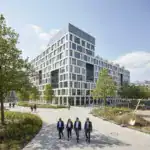
The City of Munich is currently developing a zoning plan for the PaketPost site, which includes provisions for two 155-meter high-rise buildings. These twin towers, if built, would be the tallest structures in Munich after the Olympic Tower. They are part of a larger urban quarter development that would include nearly 1,200 apartments and over 3,000 workplaces. The ‘HochhausSTOP’ initiative, submitted in March 2025, was initially rejected by the city council as inadmissible.
VGH Upholds Lower Court’s Decision
The high-rise opponents then appealed to the Munich Administrative Court, where they also faced a setback. The judges at that time argued that the question was unclear and misleading for voters. The VGH has now upheld this decision, emphasizing that for citizens, the question itself must clearly define the measures the City of Munich would be obliged to take. This was not the case here, making the VGH’s decision final and unappealable.
Mayor Dieter Reiter (SPD) acknowledged the decision, stating, ‘Anyone who wants a citizens’ decision must ask a clear, unambiguous, and enforceable question.’ He added that this was precisely what was missing in this case. Reiter also stressed that ‘this decision is not a fundamental judgment against citizen participation – and it is certainly not a high-rise decision for all of Munich.’ He clarified that the ruling concerned a single, ongoing zoning plan procedure for the PaketPost site, and that ‘anyone who claims otherwise is deliberately misleading the people of Munich.’
‘HochhausSTOP’ Association Expresses Disappointment
In response, the ‘HochhausSTOP’ association expressed regret that ‘the citizens of the state capital Munich, unlike in the first high-rise decision of 2004, are denied the opportunity to decide for themselves on the dam break with which two 155 m high skyscrapers are to be realized next to the Paketposthalle.’ Robert Brannekämper (CSU), chairman and state parliament member, along with co-chairman Wolfgang Czisch, announced that they would thoroughly examine the zoning plan’s statutory resolution for the PaketPost site and then decide ‘how we can continue to advocate for the preservation of our world-famous and beloved city skyline and continue to fight.’
Former Mayor Christian Ude (SPD) recalled the 2004 citizens’ decision, which stipulated that no high-rises over 100 meters should be built. Ude criticized the city council, stating, ‘The city council has now abandoned this decision by the citizens of Munich without any real citizen participation, because it suits them and the investor right now.’ He believes that only the citizens themselves should be able to reverse what they decided: ‘The rejection of the citizens’ initiative by the city council is therefore a brazen paternalism of the citizens of Munich – court rulings notwithstanding!’
The decision marks a significant moment in the ongoing debate about urban development and citizen participation in Munich, particularly concerning the city’s skyline and the balance between modernization and historical preservation.