The passing of logistics billionaire Klaus-Michael Kühne, who died overnight on Monday at the age of 89 in Schindellegi, Switzerland, casts a long shadow over Hamburg. Despite having lived outside his hometown for decades, Kühne’s financial influence was deeply embedded in numerous institutions and projects across the city. This raises a crucial question: what will become of Hamburg now?
Kühne’s Enduring Legacy: HSV, Elbtower, and the Opera House
Kühne’s involvement in Hamburg was multifaceted, touching upon sports, urban development, and culture. His passing marks a pivotal moment for several high-profile ventures.
The Hamburger SV: A Financial Lifeline and a Contentious Relationship
Klaus-Michael Kühne’s engagement with the Hamburger SV, now back in the first German football league, began in 2010. Over the years, he reportedly injected over 100 million Euros into the club, initially funding expensive player transfers. He continued to provide millions, sometimes as loans, sometimes as de facto donations. His long-term acquisition of the stadium’s naming rights, returning it to “Volksparkstadion,” was a significant gesture.
After the club spun off its professional division into a public limited company, Kühne became a shareholder in 2015. This period, however, was not immediately successful, with HSV being relegated to the Second League in 2018, only returning to the top flight in 2025. Kühne’s stake currently stands at 13.5 percent, held by his private holding company, which will now be managed by his long-standing confidants. The current stadium naming rights deal, valued at approximately four million Euros annually, runs until 2028.
The HSV’s official statement on Kühne’s death reflected a nuanced relationship, acknowledging him as someone “always there when the club needed him,” yet also noting his tendency to “scold after defeats, threaten to withdraw affection and money, and let many board members and sporting directors know what he thought of the club’s path, with its far too long stay in the second league.” Given HSV’s current sound financial standing, largely thanks to Kühne, the medium-term expiration of the Kühne Holding’s involvement is likely manageable, provided the club avoids overspending in pursuit of success.
The Elbtower: A Stalled Project’s Uncertain Future
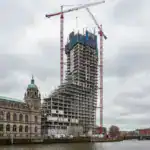
Kühne, through his holding, was also part of the investor consortium aiming to take over and complete the Elbtower, a ruin that has been dormant for nearly three years. Even before his death, progress was challenging. While the city announced last year its intention to purchase a portion of the completed building for use as a natural history museum, negotiations between the city and the consortium have reportedly stalled significantly.
The city is unwilling to spend more than 600 million Euros, a sum deemed insufficient by the consortium. Kühne’s death is unlikely to make the investor group more amenable to the city’s offer. Had costs unexpectedly risen, Kühne’s personal fortune could have theoretically absorbed them. Whether the holding company will be willing to assume this financial risk post-Kühne remains uncertain.
Hamburg’s New Opera House: A Legacy Secured?
In contrast, Kühne’s death appears to have no immediate impact on Hamburg’s future opera house. Kühne himself had openly acknowledged last summer, after the plans were unveiled, that he might not live to see its completion. With the city preparing the Baakenhöft site at a cost of a quarter of a billion Euros, Kühne had committed to fully finance the construction, estimated to be at least 350 million Euros. The responsible cultural authority confirms that Kühne’s death changes nothing, as the contract was made with the Kühne Foundation. The foundation would likely only pull out if costs spiraled completely out of control.
The Kühne Foundation: Stewarding a Vast Fortune
The Kühne Holding, valued at approximately 40 billion Euros, will now transition into the Kühne Foundation. The foundation’s board, comprising Kühne’s wife Christine and nine other gentlemen, will now decide on the future of Kühne’s other engagements, which hold varying degrees of relevance for Hamburg. These include a 30 percent stake in the Hamburg shipping company Hapag-Lloyd and the private logistics university founded by Kühne.
A Broader Perspective: Philanthropy, Public Good, and Urban Development
Klaus-Michael Kühne’s philanthropic endeavors and investments have undeniably shaped Hamburg. His contributions, while significant, also highlight the complex interplay between private wealth, public projects, and urban identity. The question of how a city balances the benefits of private investment with the need for public oversight and equitable development remains pertinent.
The HSV’s experience with Kühne’s financial support, while crucial, also demonstrated the potential for friction when personal opinions and financial leverage intersect with club management. The Elbtower saga, characterized by stalled negotiations and uncertain funding, underscores the challenges of large-scale urban development projects, particularly when reliant on multiple private investors.
The new opera house, secured through the Kühne Foundation, offers a glimpse into a more structured and perhaps more stable form of philanthropic engagement. This model, where a foundation rather than an individual is the contracting party, provides a degree of insulation from personal changes and ensures a longer-term commitment.
However, the shift in control from an individual to a foundation also raises questions about transparency, accountability, and the strategic direction of these significant assets. While Kühne’s personal vision and passion drove many of these initiatives, the foundation’s board will now be tasked with interpreting and implementing his legacy, potentially with different priorities or approaches.
Looking Ahead: Hamburg’s Future Without Its Benefactor
Kühne’s death marks the end of an era for Hamburg. His absence will undoubtedly be felt across various sectors, prompting a re-evaluation of financial strategies and project dependencies. The city now faces the challenge of navigating this transition, ensuring that the momentum generated by Kühne’s investments continues, while also fostering sustainable and equitable development.
The decisions made by the Kühne Foundation in the coming years will be crucial in determining the long-term impact of his vast fortune on Hamburg. Will the foundation continue to prioritize the same areas of investment? Will it seek new avenues for engagement? And how will these decisions align with the city’s broader development goals and the needs of its citizens?
Ultimately, Kühne’s legacy in Hamburg is a complex tapestry of financial support, personal influence, and strategic investments. His death not only signifies the loss of a major benefactor but also initiates a period of introspection and strategic planning for a city that has benefited immensely from his contributions.