

Tourism brands can’t afford to ignore AI search in 2027 because it has already changed how people find and book travel, and it will keep changing fast.
What used to be a simple path-type keywords, click links, visit sites-has turned into a mixed, chat-based experience where AI assistants, generative search, and social platforms shape choices long before someone lands on a booking page.
This is a big change, not a small tweak to SEO. It means brands must rethink what “visibility” and “trust” look like online, and it has already produced a discipline of its own: https://non.agency/en/blog/generative-engine-optimization-geo-a-complete-guide-to-ai-visibility/
Why AI Search Matters for Tourism Brands in 2027
The pressure to take AI search seriously is not a future issue; it’s already here and will be stronger by 2027. By mid-2026, research showed that many hotels and tour operators were basically missing from AI search answers.
If nothing changes, that problem gets worse. This also means the fight for traveler attention now happens earlier-before classic booking channels even show up.
Hospitality leaders are already asking: who “owns” this new visibility, how do we measure results, and where should budget go earlier in the funnel to capture demand?
What Is AI Search and How Does It Impact Travel Discovery?
AI search goes beyond the old “10 blue links.” It works more like a chat assistant that can understand longer questions, pull details from many sources, and give a short list of suggestions — often based on personal needs. Travelers don’t just search for facts; they ask for ideas and full plans. Someone might start with: “Where should I stay in Porto for a quiet weekend within walking distance of the historic center?” and then turn that into a full itinerary without leaving the AI tool.
Because of this, travel discovery happens earlier and in a more flexible way. Many recommendations get formed before a traveler visits an OTA, a metasearch site, or a hotel’s own website. AI tools pull information from across the internet — your website, reviews, OTA pages, press articles, social media, and travel forums — to choose who gets recommended and who gets skipped. For independent and regional brands, this matters a lot. If you don’t show up in early AI-led research, you may never get considered, which means there is no demand for your direct channel to convert.
That changes who a hotel website is really built for. As Rafał Moszkowcow Chomsky from NON.agency puts it: “We’re heading toward a world where you optimize sites for AI agents, not just human users.” Room descriptions, location details, and policies need to be readable by the system assembling an itinerary, not only by the guest who eventually lands on the booking page.
How AI Search Changes Consumer Decision-Making for Travel
AI search changes how people decide. Instead of jumping between many sites to compare options, many travelers now get full answers inside AI chat tools or AI summaries like AI Overviews. People often finish their research right there, and only click to a website when they are ready to book or take action. This is part of the “zero-click” pattern: traffic may drop, but the visitors who do click can be more ready to buy.
AI tools do more than repeat information. They shape which options get filtered in, how comparisons are shown, and which brands feel “trustworthy enough” to include. A traveler might find an idea on TikTok, check opinions on Reddit, then read an AI-generated comparison before searching for a specific provider. By the time classic search happens, the shortlist may already be set-heavily shaped by early AI suggestions. Tourism brands need to be understood by AI at these early stages, not just later when someone is ready to book.
AI Search vs. Traditional Search: What’s Changing for Tourism Brands?
AI search is very different from traditional search, and brands that want to do well in 2027 must understand the gap. Some old SEO rules still matter, but many are changing quickly. This is not just “new algorithms.” It’s a change in how information gets processed, displayed, and used.
From Blue Links to AI-Powered Answers
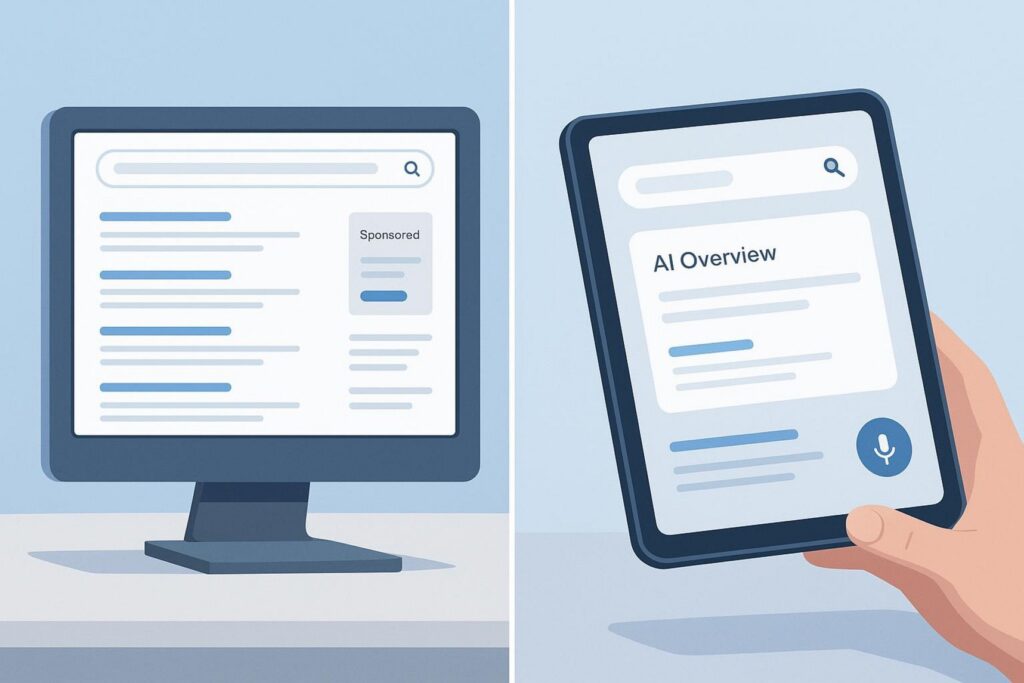
For years, SEO focused on ranking in the list of organic results. Success meant position, impressions, and clicks. AI search-especially features like Google’s AI Overviews-changes that. Users often see a single written answer at the top, built from several sources. That reduces the need to click on individual sites.
So even if you rank well in normal search, that may not mean you get seen. Your content might be strong, but if an AI system can’t pull it out clearly and reuse it with confidence, your brand may be left out. The goal shifts from being listed to being quoted, referenced, and recommended by the AI. That pushes brands to write and publish information in a clearer, more direct, and less confusing way.
Search Experience Shifts: Zero-Click, Summaries, and Voice
AI is speeding up trends that were already happening, especially zero-click search. SparkToro’s clickstream analysis found that by mid-2026, 68% of U.S. Google searches ended without a click, up from 60% two years earlier. AI Overviews are a big reason for this, and they cut click-through rates by about 60% when they show up. For tourism brands, this means the “influence moment” often happens inside the AI summary, even without a site visit.
Voice search is also growing as assistants like Siri, Google Assistant, and Alexa improve. People asking for travel suggestions by voice trigger similar AI systems and quality signals as typed searches. That means content should be easy for AI to read and also sound natural in spoken answers. Search is becoming more interactive and less dependent on users clicking and browsing.
The Role of Entity Recognition in AI Search
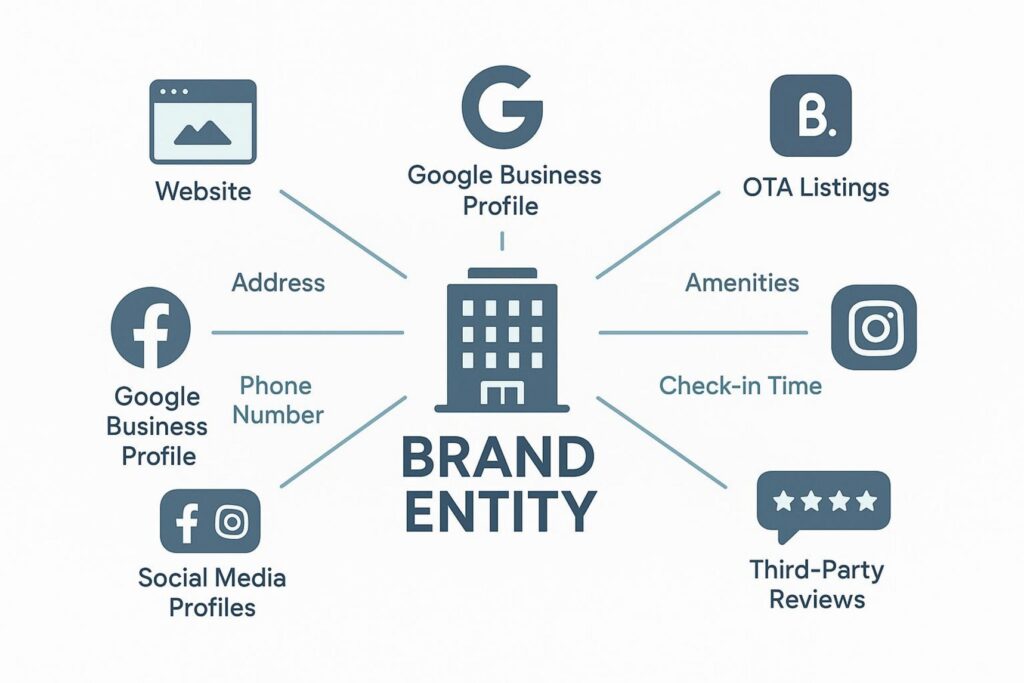
A major change is the move from keyword matching to entity understanding. AI tools don’t just look for words. They build a picture of “entities” (like hotels, tour companies, places, and concepts) and how they connect. For a tourism brand, the AI is trying to understand who you are, what you offer, who it’s for, and when it fits best-not just what terms appear on a page.
This understanding comes from your full online presence. If your hotel talks about family facilities on your site, your Google Business Profile, OTAs, and your reviews also mention it, then AI can label you as “family-friendly” with confidence. But if your information conflicts-different phone numbers, old descriptions, missing amenities-AI becomes less sure and may avoid recommending you. Clear, consistent entity signals matter a lot for AI visibility.
How AI Search Ranks and Recommends Travel Brands
AI search does not work like classic “rank this page” SEO. It looks more at the full picture: how trusted you seem, how relevant you are, and how easy your data is to use across the web. To get recommended, brands need to present information in a way AI can quickly understand.
AI-Readable Content: Structured Data, Schema, and Markup
AI tools rely on clear information. They don’t read pages the way people do; they pull facts, compare them, and summarize. That makes structured data and schema markup very useful. Structured data is code that tells search engines exactly what your content means, instead of forcing them to guess from plain text.
For tourism brands, schema types like TouristTrip, LocalBusiness, Event, and Review can help. FAQ schema is also helpful for common questions about booking rules, what’s included, or accessibility. If key details like pricing, inclusions, or availability are hidden in long paragraphs or inconsistent across pages, AI may struggle to use them. The clearer and more consistent you make these details, the easier it is for AI to trust and surface your brand.
Brand Authority and Entity Signals Across Platforms
AI tools, similar to Google’s E-E-A-T idea (Experience, Expertise, Authoritativeness, Trustworthiness), prefer sources that look trusted across the internet. That means authority does not come only from your website anymore. It comes from your full digital presence. Consistent information everywhere matters, including a complete, up-to-date Google Business Profile, which feeds directly into Google’s systems.
Earned mentions also matter. Being listed in respected travel articles, featured by local DMOs, or recommended in travel forums and Reddit threads gives AI extra proof that you are real and reliable. The more often your brand is mentioned in a consistent, positive way, the more likely AI is to recommend you.
Why Third-Party Reviews and OTAs Influence AI Visibility
OTAs like Viator and GetYourGuide often show up in AI travel recommendations, and it’s not only because they are big. They have an advantage because their content is formatted in a consistent, comparable way. Pricing, duration, what’s included, and reviews follow a set structure, which makes it easy for AI to extract and reuse.
Review platforms like TripAdvisor and Google Reviews are also treated as trusted third-party sources. A business with 200 recent, detailed reviews across platforms looks much stronger to AI than a business with a few old reviews. New reviews and active responses also act as trust signals, showing the business is operating and cares about guests. So for tourism brands, strong OTA listings and an active review plan are not just “distribution” or “reputation work.” They are direct AI visibility moves.
The Risks for Tourism Brands Neglecting AI Search in 2027
The risks in 2027 are high. Ignoring AI search is not just missing a new channel-it can mean losing market share, losing brand relevance, and losing direct bookings. Things are moving fast, and doing nothing makes it easier to disappear.
Reduced Brand Visibility and Loss of Direct Bookings
The biggest risk is losing visibility. If your information is not set up for AI systems, you may not show up when travelers use AI for planning. Curacity and Cornell research already suggests 94% of hotels are invisible in AI search results. If travelers never see you during early planning, you may never get on the shortlist, even if your classic SEO is fine.
If you never enter the shortlist, your direct channel has no chance to convert. That leads to fewer direct bookings and more dependence on third-party channels-or lower occupancy. Brand awareness also protects you less than before, because AI influences choices earlier, before people do a branded search.
Dominance of OTAs and Aggregators in AI-Driven Results
OTAs and aggregators are well set up for AI search because their information is structured and easy to compare. Many brand websites use rich, story-style content, which is great for humans but can make it harder for AI to pull out key facts like price, inclusions, and availability.
If your own channels are not AI-friendly, AI tools may rely more on OTA data, which strengthens OTAs even more during discovery. That can push brands into higher commission costs and weaker direct relationships with guests. The challenge of growing direct bookings while controlling acquisition costs becomes harder when AI keeps recommending third-party platforms.
Missed Opportunities from Changing Customer Behaviors
Travelers, especially younger ones, are building new habits for discovery. Many now use ChatGPT, TikTok, and Instagram for ideas and planning, sometimes skipping classic search engines. If tourism brands focus only on traditional SEO and late-stage conversion, they miss these early moments where future demand starts.
Ignoring AI search means missing the start of the journey-when people pick destinations and get excited. That reduces demand creation and brand growth. By the time these travelers are ready to book, their decisions may already be mostly made. Brands that don’t adapt then compete for a smaller pool of demand at a higher cost. Conversations like the ones shaping Outrigger Hospitality Group’s 2027 commercial budget show this shift: more attention is moving to the upper funnel to capture future demand.
Strategies to Strengthen AI Search Visibility for Tourism Brands
Adapting to AI search does not mean throwing away good marketing basics. It means updating them. For tourism brands, stronger AI visibility comes from clear information, consistency, and real value.
1. Prioritizing Content Quality and Topical Expertise
In an AI-led search environment, generic content and keyword stuffing won’t stand out. If a machine can produce it in seconds, it won’t be special. Tourism brands should create content based on real experience: insights from local guides, real guest stories, practical itineraries, and details that go beyond what’s already everywhere. As AI content becomes easier to make, real-world knowledge becomes more valuable.
For a tour operator, that can mean detailed experience pages that explain areas visited, timing and logistics, dietary choices, backup weather plans, and lots of meaningful reviews. Specific details help signal authority to AI. As Rory Gillett of Parlez Creative notes, operators who clearly own a niche and show real expertise tend to win, while trying to appeal to everyone can make you disappear in AI search. You need to be a strong source of real local details that AI tools can use early in planning.

2. Eliminating Entity Ambiguity Across All Digital Touchpoints
AI systems work best with consistent facts. Conflicting info causes problems. A key step for tourism brands is removing entity confusion across all platforms. Your name, address, phone number, website, categories, amenities, descriptions, and opening hours should match on your site, Google Business Profile, TripAdvisor, OTAs, and social profiles.
If a hotel shows different phone numbers or different amenity lists across sites, AI may not trust which version is correct-and may avoid recommending the brand. Consistency makes it easier for AI to understand what you are and when you fit a traveler’s needs. Regular checks across third-party listings help catch and fix mismatches.
3. Building Consistent, Trustworthy Signals for AI Systems
Along with content and clean data, tourism brands should build steady trust signals across the web. This means supporting your brand story with proof from many places. A strong SEO base — clear site structure, useful content, and fast performance — still helps, because it signals reliability to the same sources AI pulls from.
Digital PR and earned media help too. Try to get included in respected travel articles, local tourism board features, and destination authority sites. Real mentions in Reddit threads and niche travel communities also matter. Partnerships with local businesses can create more shared mentions and references over time, building a strong online presence that AI tools can trust.
Worth checking what that presence is currently worth against your competition. As Rafał Moszkowcow Chomsky from NON.agency puts it: “If your competitors get 8% of traffic from AI and you get 0.5%, that gap is the opportunity.” Trust signals accumulate slowly, so the brands measuring the gap now are the ones with time to close it.
4. Leveraging Review Platforms and OTA Listings
Reviews and OTA listings work as major AI visibility assets. Tourism brands should use them on purpose, not only as sales channels. Make sure OTA listings are complete: strong descriptions, high-quality photos, accurate prices, and current availability. Treat these pages as an extension of your website, with the clear, structured information AI tools like.
Also, ask for reviews after each stay or tour, guiding guests to Google and TripAdvisor. New reviews and steady volume matter; no new reviews for 18 months can look like a warning sign to AI systems. Replying to reviews, including negative ones, shows you are active and professional, which adds trust. Even if travelers first find you through AI via an OTA listing, they can still become repeat direct customers later.
5. Practical Steps: Audit, Optimize, and Track AI Search Performance
Start with a simple audit of your current AI visibility. Use tools like ChatGPT, Gemini, Claude, and Perplexity, and search using normal questions in your destination (for example: “best walking tours in Barcelona”). Write down who appears and whether your brand shows up. Tools like Microsoft Clarity’s AI Citations dashboard can also help you see which queries lead to citations of your domain.
Then optimize. Fully complete your Google Business Profile, fill every field, add fresh photos often, and respond to Q&A. Add real FAQ sections to key pages, answering traveler questions in clear language. Claim and check your profiles on trusted platforms like Viator, GetYourGuide, TripAdvisor, and Google Things to Do.
After that, track performance. Keep classic SEO measures, but also track branded search growth, AI mentions, citations, and assisted conversions in Google Analytics 4. These signals help you see how your brand affects decisions earlier in the AI-led journey.
Future Trends: How AI Search Will Shape Tourism Marketing Beyond 2027
AI search will keep changing after 2027. The shifts may get even bigger, so tourism brands will need ongoing adjustments. Knowing what’s coming helps brands plan ahead and avoid falling behind.
Anticipating Consumer Adoption of Generative AI for Travel Planning
More travelers are using generative AI to plan trips. Arival research says two in three travelers now use AI when planning, and almost half use ChatGPT. This is moving into the mainstream. As AI tools become easier to use, show up in more devices, and handle more detailed requests, they will play a bigger role in trip planning. Brands should prepare by creating content that works well in conversation, making key details easy to access across AI tools, and learning how different AI systems choose sources.
A near-term shift is “agentic AI,” where AI doesn’t just suggest options-it takes actions. Instead of only recommending a food tour in Barcelona, an agentic AI could compare options and book it for the traveler. That makes booking systems, real-time availability, and API connections more important. AI visibility will include tech and data readiness, not just content and reviews.
Business Model Impacts and the Path Toward Direct Relationships
AI search will keep putting pressure on current tourism business models. AI Overviews may reduce clicks, but they may also send fewer, more ready-to-book visitors. Commercial teams will need to balance spend between capturing demand late in the funnel and shaping demand earlier in the funnel. That can lead to budget moving earlier in the journey.
Building stronger direct relationships in an AI-first environment depends on becoming the main source AI trusts. If you keep publishing unique, experience-based content and keep your data accurate everywhere, AI is more likely to point to you as the main entity. That can reduce dependence on OTAs and support direct bookings, even if discovery starts in an AI tool. Many hospitality teams are already changing how they work-content, CRM, and operations-because the final question is financial: where to invest for future revenue performance.
Evolving Metrics and the New Definition of Success in AI Search
Old attribution models that rely on the last click before booking don’t work well in the AI era. They miss the influence that happens weeks earlier when someone chooses a destination or starts building a shortlist. Measuring success in AI search needs a wider set of signals.
Useful metrics include branded search growth (often a sign someone discovered you via AI and then searched your name), plus AI mentions, citations, and assisted conversions in tools like Google Analytics 4. Success will mean building a credible entity that AI recommends with confidence-and then connecting those early recommendations to later engagement and bookings, even if the final click happens somewhere else. This calls for a wider view of the full traveler journey.
Key Takeaways for Tourism Brands in the Age of AI Search
Heading into 2027, the message is simple: AI is writing the next chapter of travel discovery, and brands that don’t show up there will lose ground. This is not a temporary trend. It is a rebuild of how travelers find, compare, and choose travel products. Brands should treat it as a chance to tighten up their online presence with clearer messaging and more real proof.
The brands most likely to win are the ones that know what makes them different, describe it consistently across every channel, and publish information in formats AI can use. This needs teamwork across the business, because visibility is no longer only a marketing topic-it affects revenue, distribution, content, and operations. Early investment in generative engine optimization (GEO) and steady ongoing updates can protect market position and build a long-term advantage, keeping your brand visible and relevant as AI-driven travel search keeps changing.











Leave a comment