Berlin Blackout: City Grapples with Aftermath of Attack on Power Grid
Berlin, January 15 – The German capital is still reeling from a significant power outage that plunged parts of the city into darkness for up to five days in the first week of January. The incident, attributed to a suspected left-wing extremist arson attack on a cable bridge in Berlin-Zehlendorf, affected approximately 100,000 residents, leaving them without electricity, heating, and hot water.
The political and technical repercussions of the attack are now being addressed on multiple fronts. The Berlin Senate has established a working group tasked with developing proposals to enhance the city’s resilience against such disruptions. Meanwhile, citizens are increasingly seeking private emergency power solutions.
Surge in Demand for Independent Power Solutions
Christian Rahn, a Berlin-based dealer of balcony power plants and mini-PV systems, reported a significant increase in inquiries since the January 3rd outage. “This was a very clear peak we saw here in Berlin,” Rahn stated, noting that many customers are now actively seeking solutions for an autonomous power supply.
A key concern for many is whether a balcony power plant can indeed provide electricity in an emergency. Rahn explains that an additional storage unit with an emergency power function is crucial. This would allow essential devices like mobile phones, internet routers, or individual heaters to remain operational for a limited time. “It’s not the perfect solution, but it’s definitely a solution that addresses the issue of emergency power,” he added.
Political Fallout and Calls for Enhanced Security
The blackout has intensified calls for increased security measures and a stronger stance against left-wing extremism. Berlin’s Justice Senator Felor Badenberg (CDU) advocated for more personnel for the Office for the Protection of the Constitution to combat left-wing extremism more effectively. She also called for extended storage of IP addresses and tools for security authorities to automatically search the internet for photos of suspects.
Federal Interior Minister Alexander Dobrindt (CSU) also announced increased personnel for the Office for the Protection of the Constitution in response to the attack. The Bundestag is scheduled to discuss the incident today, following a request from the AfD for a current affairs hour.
During a meeting of the Interior Committee of the House of Representatives, Interior Senator Iris Spranger warned against similar acts. “With their goal of unsettling the population and society, the terrorists have clearly failed,” the SPD politician said. “That doesn’t mean they couldn’t try again.”
Vulnerability of Critical Infrastructure
Stromnetz Berlin, the city’s power grid operator, acknowledged that despite extensive protective measures, the network is not entirely secure. Erik Landeck, CEO of Stromnetz Berlin, stated that “such a branched infrastructure, visible throughout the city, cannot be 100 percent protected.” He noted that the affected cable bridge in Zehlendorf was already physically protected and regularly monitored by security personnel.
Landeck emphasized that power grids were not designed for such attacks in the past but rather to manage technical malfunctions. He added that security would play a larger role in future approvals and expenditures. All network nodes are now being monitored, and by early February, 100 percent of substations will also be under surveillance, placing Berlin ahead in comparison to other cities.
Police Response and Crisis Management Criticism
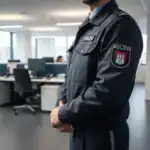
Berlin’s Governing Mayor Kai Wegner (CDU) announced plans to increase video surveillance at critical points of the power grid. The Berlin Senate also discussed the role of the police, who are currently securing the power grids with several hundred officers.
However, the police union criticized this as “politically motivated hyperactivity” that pushes the Berlin police to their limits. Wegner assured that efforts are underway to find a private security service to share these tasks.
The Berlin government has faced criticism for its crisis management, particularly for declaring a major incident only on the afternoon of the second day after the attack. The Senate has pledged to draw swift conclusions, aiming to compile a list within the next two weeks outlining lessons learned from the arson attack and its consequences.
Investigation and Group Responsibility
A radical left-wing group claimed responsibility for the attack in a text deemed authentic by the police. The group cited the fight against capitalism and “the rich” as their motives. The Federal Public Prosecutor’s Office in Karlsruhe has taken over the investigation.
Justice Senator Badenberg described the left-wing extremist scene as “not a fixed, not a homogeneous group.” She explained that these groups often coalesce around specific themes or actions, making investigations more challenging than in other areas of crime.
The incident has highlighted the ongoing threat of attacks on critical infrastructure and the need for robust preparedness and response strategies in urban environments.
Source: tagesschau.de