Berlin, May 27 – A new “Resilience Lab” has been established at a passage in Ostbahnhof, Berlin, with federal government support, aiming to strengthen societal resilience and enhance collaboration between civilian organizations and the military. The facility will serve as a hub where emergency services and armed forces can jointly develop and test new approaches for crisis situations, as stated by Research Minister Dorothee Bär (CSU) at the opening of the premises. The goal is to ensure all involved parties can act quickly and coordinately in an emergency. The lab is currently under construction.
Interactive Training for Emergencies
The initiative seeks to prepare individuals digitally for crisis scenarios, teaching them how to manage emergencies and dangerous situations effectively. A particular focus will be placed on strengthening self-help capabilities. Citizens will be able to answer questions about appropriate behavior in crises, prepare for power outages in a simulator, assume various roles in an interactive blackout scenario, and pack an emergency kit with all essential items within two minutes.
Promoting Civilian-Military Cooperation
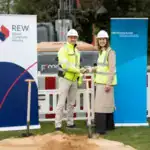
Dorothee Bär (CSU), Federal Minister for Research, Technology, and Space, alongside Kai Wegner (CDU), Governing Mayor of Berlin, participated in a playful task during the opening of the “Resilia” Innovation Hub for Security and Defense at Berlin’s Ostbahnhof. They assembled emergency equipment, highlighting the hub’s role in strengthening civilian-military cooperation and fostering the development and testing of innovative security solutions. The stationary Resilience Lab will allow citizens to interactively experience and learn how to best manage emergencies and hazards through realistic crisis scenarios.
A Collaborative Project with Million-Dollar Funding
The “Resilience Lab” is the core of the “Resilia” project, operated by the Bundeswehr University, the Berlin Fire Department, Freie Universität Berlin, and other research institutions. It receives millions in funding from the federal government. The exact start date for operations or when visitor groups can access the “Resilience Lab” was not yet determined at the presentation. Initial indications suggested visitors could be admitted from late 2026 or early 2027.
Addressing Modern Crisis Challenges
The establishment of the “Resilience Lab” comes at a time when global events, including war, power outages, and natural disasters, underscore the increasing importance of robust crisis preparedness. By offering hands-on training and fostering inter-organizational collaboration, Berlin aims to set a new standard in public safety and resilience. The lab’s interactive nature is designed to make learning engaging and practical, ensuring that participants gain valuable skills that can be applied in real-life emergencies.
Future Outlook and Public Access
While the lab is still in its developmental phase, the long-term vision is to create a dynamic environment where continuous learning and adaptation to new threats can take place. The involvement of multiple academic and governmental bodies ensures a comprehensive approach to crisis management, integrating the latest research with practical operational needs. Further announcements regarding public access and specific training programs are expected as the project progresses towards its full operational capacity.
The “Resilience Lab” represents a significant investment in the future safety and security of Berlin’s population, emphasizing proactive preparation over reactive responses. Its innovative approach to training and collaboration is anticipated to become a model for other regions facing similar challenges.