The scent of anticipation hangs in the air, thick with the promise of stories yet untold. For a year, the grand doors of the Sendlinger Tor Cinema in Munich have been shut, its iconic facade a silent testament to a bygone era of cinematic magic. But now, a new chapter is about to begin, spearheaded by a man who believes that some stories are too important to be forgotten: actor Frederick Lau.
The Berliner with a Munich Mission
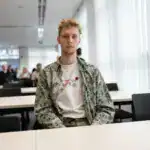
Frederick Lau, a name synonymous with powerful performances and a distinctive, heartfelt presence on screen, is no stranger to preserving what he cherishes. “I’m a child of antique dealers,” he explains, his voice carrying the warmth that has endeared him to audiences. “It’s in my nature to preserve old things and not let them fall into oblivion – like a listed cinema.”
The 36-year-old Grimme Award winner, known for his roles in “The Wave” and “Victoria,” is more than just an actor. Alongside Nicolas Solar Lozier, he co-founded “Behind The Tree,” an independent streaming service where fellow artists like Jessica Schwarz and Kida Ramadan curate arthouse films. In Berlin, they established the intimate Forest Cinema, a haven for 20 cinephiles to experience “special” films on cushions. But the challenge awaiting him in Munich is on a grander scale.
Together with the artist collective “Broke.Today” and event professional Matthias Schlick, Lau and Lozier are set to breathe new life into the 300-seat Filmtheater am Sendlinger Tor. This weekend, January 17th and 18th, marks the grand opening of “Das neue Dings” – a temporary, yet ambitious, revival of the beloved cinema.
More Than Just Popcorn: A Cinematic Experience
The question on many minds is why Lau, with his already packed schedule, would take on such an endeavor. “I don’t even know where my head is with all these projects,” he admits with a laugh. But his passion for cinema, especially traditional cinema, is undeniable.
“I always loved traditional cinema. Then I heard that we had the opportunity to revive this traditional cinema at Sendlinger Tor – that’s an open door for me,” he says. His vision extends far beyond simply showing films. “We don’t just want to open a film screening room, we want to bring people back the joy of the cinema as a place. With our extravagant cinema, we show: cinema has to be more than just sitting down and popcorn. Cinema has to be an experience.”
The traditional single-screen cinemas have struggled in recent years, with the Sendlinger Tor Cinema’s previous operators citing unmanageable rent increases. Lau believes the solution lies in restoring the emotional connection to the venue. “I believe, quite honestly, that what we are planning right now is a solution. To make the cinema a place again where you feel great emotions. It shouldn’t just be: Let’s just go to the cinema for a short while.”
In an age of high-quality home streaming, the communal aspect of cinema has become even more crucial. “People want to get together again after the pandemic, spend time together,” Lau emphasizes.
Oysters, Art, and Immersive Stories
So, how does Lau plan to lure people away from their comfortable sofas? “On the one hand, we come up with a program of films that get under your skin, that you still feel in your head and body half a year later,” he explains. “On the other hand, we create beautiful evenings around them. When we show films, we do so in a context. We do exhibitions, there are events, readings, concerts, live podcasts. Everything with the direction: film, art. We bring people together, encourage discourse.”
One such example is the “Oysters and Movies” series, set to launch in late January. While it might sound decadent, Lau assures it’s about celebrating French film culture. “Nobody is forced to have oysters and champagne, it’s more about celebrating French film culture,” he clarifies.
The historic, listed hall of the Sendlinger Tor Cinema will be transformed with immersive video mappings by the Broke.Today artist collective, promising a visually stunning experience. Lau, who has been friends with Nicolas Solar Lozier for 20 years, expresses immense anticipation for the project. “Big anticipation. I’ve always been a friend of traditional cinema.”
A Legacy Preserved, New Stories Told
Even from his home in Berlin, Lau was familiar with the reputation of the Sendlinger Tor Cinema. “The cinema at Sendlinger Tor is known nationwide with two or three cinemas, like the Kino International and the Delphi in Berlin. You know it. I’ve been there often. Whenever I saw it from the outside, I thought it was beautiful and was already looking forward to going in.”
He even recalls the pride of seeing his own image on hand-painted cinema posters, a rare honor for any filmmaker. Lau finds the “Dings” project’s intention to decorate the beautiful facade with art particularly strong. He’s also delved into the history of Munich’s cinema pioneer Karl Gabriel, who, like Lau and his partners, sought to create palaces for this new art form.
“We started by bringing cinema to different, unexpected places. And then we also decided that we wanted a permanent home, so we opened our first cinema in Berlin in the Michelberger Hotel,” Lau recounts. “That’s why I think it’s so great when you go into the ‘Dings’ at Sendlinger Tor, that it’s not just a cinema, but an experience. A place where artists meet.”
This opening weekend, Lau himself will be part of the program with the live podcast “Behind The Tresen,” where he and Lozier will discuss his work. While he’s never ventured onto a theater stage, he admits it’s a future aspiration. “I’ve never done it yet. But lately I’ve been thinking about what else I want to do. And I want to be on stage in a theater once. And it has to be good and then that’s enough.”
Lau also plans to bring his esteemed colleagues to Munich, including Alexandra Maria Lara and Sam Riley, who will present their 2025 film “Bulk” – a black-and-white feature that lacks German distribution. This will be part of the “Dinner, Drinks and Movies” series, combining good films with culinary delights and engaging discussions.
The Filmfest München and Dok-Fest have already expressed keen interest in collaborating with “Das neue Dings,” recognizing the potential of this unique venue. Lau hopes to screen one of his own films, though he emphasizes that “self-promotion doesn’t have to be.”
As the grand opening approaches, the Sendlinger Tor Cinema is poised to once again become a vibrant cultural heart within Munich. Frederick Lau, the Berliner with a passion for preservation and a vision for the future of cinema, is not just reopening a building; he’s rekindling a dream, one immersive experience at a time.
Source: https://www.sueddeutsche.de/muenchen/kino-sendlinger-tor-muenchen-frederick-lau-zwischennutzung-li.3363260