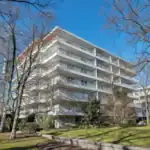
The idea was born in July 2022, amidst the lively discussions in Andy Ebert’s kitchen. The tenants of Wörthstraße 8 gathered, a sense of urgency palpable in the air. Just days prior, one of them had stumbled upon a real estate listing that read, “That’s your house!” The asking price for half of the building, near Bordeauxplatz in Haidhausen, was a staggering 6.5 million euros. For the 14 households, who were paying rents between six and twelve euros per square meter, this advertisement was a harbinger of potential disaster. Stories of gentrification, where old buildings are sold, renovated, and rents skyrocket, were all too common in Munich. The fear of displacement loomed large. It was then that a audacious plan began to take shape: the tenants would buy their own home.
A Bold Plan Becomes Reality
Three and a half years later, this ambitious vision has become a reality. In February, the contracts were signed, and just weeks ago, the purchase price of 4.2 million euros was transferred. Katrin Göbel, a resident for over 35 years and co-owner of a shop in the building, expresses immense relief. “The trembling is gone now,” she says. “This fear of what might come.”
However, Göbel admits, “The three and a half years were full of ups and downs. We were often on the verge of giving up.” Andy Ebert, an IT specialist, recalls the emotional toll the process took on the community. “We all slept poorly, and I spent many nights awake,” Ebert says. “We were dealing with absurd sums at the time. And I kept asking myself: Andy, are you perhaps pushing this in the wrong direction?”
Overcoming Financial Hurdles with a Syndicate
Shortly after that initial meeting, Ebert, on behalf of the residents, contacted the owners of the 1894-built property. The response was encouraging. One owner agreed to transfer her half of the house to a foundation that supports social and cultural causes. The other brother offered his share to the tenants for five million euros. “From then on, it was just a question of financing,” Ebert states, his calm demeanor belying the enormous challenge he describes.
To tackle this, the community turned to the Mietshäuser Syndikat, a non-commercial initiative from Freiburg that assists groups in collectively buying or building properties. Over 200 such projects have been realized across Germany, though only two existed in Munich prior to this – one in Ligsalzstraße and another in Görzer Straße. The Wörthstraße community formed an association, “Wörth 8,” and established a GmbH, with the Mietshäuser Syndikat joining as a second shareholder to prevent future sales of the property. The ground was leased from the foundation through a hereditary building right.
A Community United: The Power of Direct Loans and Public Support
The fundraising for “Wörth 8” began in 2023, initially with a slow start. “At first, it was almost exclusively relatives and friends who supported the project,” Ebert says. “We were in the mid-six-figure range, so three million euros seemed utopian.” In early 2023, the community faced a setback when several parties withdrew from the project, bringing the entire endeavor to the brink of collapse. “We had a depressive phase then,” Ebert recalls.
However, two crucial events turned the tide. Firstly, the media picked up on “Wörth 8,” leading to nationwide coverage of the “lighthouse project” in Haidhausen. This publicity caused a surge in direct loans. Today, over 200 individuals have provided nearly 2.8 million euros in loans for the project. “We realized that we could only achieve our goal if we went public,” Ebert explains. “Thanks to the reporting, the awareness of Wörth 8 has grown immensely, and that helped us.”.
Secondly, in August 2023, the city council decided to support the tenant community’s project with 1.25 million euros. In return, five apartments in the building became subsidized housing, rented to low-income individuals. This model was initially conceived as a pilot project. However, due to the strained budget, the city has since put similar funding on hold. “Today, we would have no chance of getting such support from the city,” Katrin Göbel notes. “So we were also lucky to hit the right time with our project.”
A New Chapter for Wörthstraße 8
Thanks to city funding, numerous direct loans, and a bank loan, the community secured the financing and purchased the property. Katrin Göbel describes the immense relief felt when signing the contracts. “Wörth 8” now self-manages the building. After four long-vacant apartments were renovated, new tenants are set to move in at the beginning of the year. The selection process prioritized individuals willing to actively participate in the project. Although the average rent has increased from ten to twelve euros, a solidarity-based model ensures that all parties could remain in the house. “That was very important to us,” says Ebert.
Reflecting on the success of “Wörth 8,” Ebert highlights three key factors: supportive owners who showed patience, the project’s timing and resonance with the public, and most importantly, the strong cohesion of the community. “Without that, it wouldn’t have worked,” he emphasizes. This pioneering project in Munich demonstrates the power of collective action in securing affordable housing and fostering a vibrant community.
Source: [sueddeutsche.de](https://www.sueddeutsche.de/muenchen/muenchen-mieter-haus-gekauft-haidhausen-li.3355654)