Munich Wastewater Management Celebrates a Century of Modern Treatment
Munich, April 1, 2026 – The Munich Wastewater Management (Münchner Stadtentwässerung, MSE) is marking a significant milestone: 100 years of modern wastewater treatment. This centennial is being celebrated with a traveling exhibition and an upcoming open day at the Gut Großlappen facility, highlighting the MSE’s crucial role in environmental protection and the sustainable management of water resources for Munich and its surrounding areas.
A Century of Progress in Wastewater Treatment
Every day, an average person in Bavaria uses approximately 136 liters of tap water for personal hygiene, cooking, laundry, and cleaning. This used water, along with industrial wastewater and surface runoff, flows into an extensive underground sewer system. For over a century, the MSE, a municipal enterprise, has been responsible for the construction, operation, and maintenance of Munich’s sewage system and its two wastewater treatment plants.
The Beginnings of Munich’s Urban Hygiene
The foundation for modern hygiene in Munich was laid by Max von Pettenkofer, who advocated for a canal system to remove waste from the city. In 1857, city architect Arnold von Zenetti initiated the construction of the first sewers. Engineer Joseph Gordon later developed a comprehensive sewerage plan for Munich, which was implemented in the late 19th century, leading to the widespread adoption of flush toilets in Munich households.
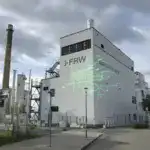
Initially, wastewater was discharged into the Isar River downstream of the city, near Unterföhring, where natural processes were relied upon for purification. However, the growing population and plans to harness the Isar’s hydropower for electricity led to the commissioning of Munich’s first wastewater treatment plant, Gut Großlappen, in 1926. Early treatment involved mechanical screening, septic tanks, and biological purification in artificial wastewater fish ponds.
Modern Wastewater Treatment Today
Over the decades, the MSE has continuously modernized its treatment plants, incorporating advanced technologies. Today, mechanical treatment includes screens to remove coarse and fine solids, and grit chambers where sand and small stones settle and are removed. The initial biological stage replaced the fish pond method, followed by a second biological stage that extracts nitrogen from the sludge. Wastewater also passes through multiple clarifiers where suspended solids settle and are pumped out. A sand filter completes the basic treatment process, achieving a purification rate exceeding 99 percent. These processes mimic natural purification but occur in a more confined space and over a shorter duration.
In 1989, a second treatment plant, Gut Marienhof in Dietersheim, became operational. Combined, both plants treat an average of half a million cubic meters (500,000,000 liters) of wastewater daily.
Treated water from Gut Großlappen is directed to the Finsing power plant. Before reaching the power plant, the nutrient-enriched water still flows through the former fish ponds, which have proven essential for the local bird sanctuary. The purified wastewater from Gut Marienhof is discharged directly into the Isar after undergoing ultraviolet disinfection to ensure the river’s bathing water quality.
Energy Generation and Sustainable Operations
Both treatment plants feature energy centers that burn the digester gas produced during the purification process to generate electricity and heat. Additionally, a photovoltaic park at Gut Marienhof has supplied electricity since 2022. These initiatives enable the MSE to cover approximately 80 percent of its treatment plants’ energy needs.
Sewage sludge is thermally processed at the Gut Großlappen incineration plant, a disposal method designed to minimize environmental impact. A new facility is currently under construction that will enable energy-autonomous incineration, meeting future requirements.
MSE’s Impact on Munich
Since the commissioning of the Gut Großlappen plant in 1926, sustainable wastewater treatment has played a critical role in protecting water bodies in and around Munich. The treatment plants ensure that the collected and treated wastewater from nearly two million people and local industries is returned cleanly to the water cycle.
This is achieved with remarkable economic efficiency, as household wastewater fees have remained consistently low for many years.
Centennial Events
To celebrate the 100th anniversary of Gut Großlappen, a traveling exhibition offers insights into the history of municipal wastewater treatment. The exhibition is on display at the Department of Building until April 13, and then at the Department of Planning from April 15 to April 30. Furthermore, the MSE will host an open day at Gut Großlappen on October 24. More information and additional exhibition locations can be found at: muenchen.de/mse
Source: Munich Wastewater Management, City of Munich