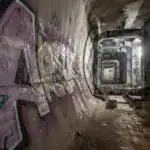
The aroma of roasted meats and Bavarian beer, once a constant presence beneath Munich’s Marienplatz, has faded. The historic Ratskeller, a culinary institution that served generations for 150 years, has closed its doors. In its place, a different kind of bustle now fills the subterranean vaults: a massive flea market, where pieces of Munich’s gastronomic history are being sold off, drawing queues that snake across the iconic square.
The End of an Era: 150 Years of Ratskeller
“Aus is und gar is, und schad is, dass’s wahr is” (It’s over and done, and it’s a pity it’s true), reads a handwritten sign at the entrance, a poignant farewell to an establishment that could accommodate over a thousand guests. The Wieser family, who had meticulously managed the Ratskeller since 1975, faced a daunting decision. Extensive renovations to the kitchen, bar areas, and other premises were estimated to cost around 1.5 million Euros.
However, with a general renovation of the City Hall and its cellar planned from 2032 onwards, restaurateur Peter Wieser was unwilling to undertake such a significant investment. Consequently, the city released him from his contract prematurely. And so, following the age-old motto of “everything must go,” the Ratskeller is parting with its entire inventory through a multi-day flea market.
A Queue Through History: Marienplatz Transformed
On a chilly January day, Marienplatz, usually bustling with tourists and shoppers, was transformed. A queue, stretching from the City Hall all the way to the Hugendubel bookstore, patiently braved the minus five-degree Celsius weather. What could possibly entice so many to endure such conditions? The promise of owning a piece of the Ratskeller’s legacy.
The organizers, keen to avoid the usual flea market chaos, are meticulously managing entry, allowing only a limited number of eager shoppers into the historic cellar at a time. This strict door policy, while creating the lengthy wait, ensures a more orderly browsing experience once inside. Backpacks and the familiar blue and yellow bags of a Swedish furniture store were common sights among those shivering in line, hinting at the treasures they hoped to carry home.
What Lies Beneath: A Glimpse into the Ratskeller’s Past
Conversations in the queue ranged from the vague “just looking” to the specific “I need a teapot.” For those who had already emerged from the cellar, the feedback was mixed. An older gentleman in a yellow jacket, clutching a gravy boat, grumbled, “Don’t bother going. They only let two people in at a time; you’ll still be here at three this afternoon.” He dismissed the offerings as “mostly junk and poorly organized.” Yet, others emerged with heavy bags and even moving boxes filled with crockery, a testament to the diverse finds.
The curiosity of passers-by was also piqued. “What’s going on here?” “Is there free beer?” “Do you know how much the glasses cost?” These questions were repeatedly answered by those in line, some of whom shared their own memories of the Ratskeller. One elderly lady waved her hand dismissively, recalling, “I used to have to go there for brunch with my father, under the big barrel – horrible!” Others, like Avi, the aspiring historian, had dined there before: “It was okay, but expensive. And lots of tourists.”
Treasures and Trinkets: From Saucières to Bishops
After a 45-minute wait, a spot in the sun offered a brief respite before the final push into the hallowed halls, now smelling faintly of must. Inside, the flea market offered a fascinating array of items. The expected was there: tablecloths, bread baskets, candles, hangers, and a vast assortment of glasses, dishes, and cutlery. But there were also unexpected finds: sparklers, various wine and champagne bottles (Moet for 36 Euros, half a Laurent-Perrier for 16 Euros), and a remarkable collection of old engravings, drawings, beautiful photographs, and historical views of Munich city life, even portraits of former wine queens.
Prices, according to an experienced flea market enthusiast, were reasonable: 20 Euros for a Diogenes engraving, 30 Euros for a Lucullus. A drawing of an unnamed German Shepherd’s head was available for 75 Euros. Art lovers might linger over the intricately carved figure of Bishop Urban, priced at a substantial 499 Euros. It could represent Bonifaz Kaspar von Urban, the former Archbishop of Bamberg, born in Beuerberg in the 18th century. “It’s a bishop, that’s for sure,” commented another interested elderly gentleman. For those with a penchant for such items or simply in need of some affordable household goods, the wait was undoubtedly worthwhile.
The Future of the Historic Cellar
As for the future of the ancient premises, no one seems to know for certain. Film student Felix mused, “Knowing Munich, an osteria will move in. Or an Irish pub.”
The flea market is scheduled to continue until Friday, daily from 10 AM to 2 PM, with card payment being the only accepted method. The closure of the Ratskeller marks the end of an era, but its legacy will live on in the memories of those who frequented it and in the homes of those who now possess a tangible piece of its storied past.
Source: https://www.sueddeutsche.de/muenchen/muenchen-ratskeller-flohmarkt-inventar-wann-oeffnung-li.3370187