Munich, January 29 – With less than nine months until Oktoberfest 2026, the annual festival is already making headlines. A local restaurateur couple has applied for prominent tent locations, traditionally managed by breweries, sparking discussions about the future of the festival’s allocation process.
Wickenhäuser-Egger Family Seeks Expansion at Oktoberfest
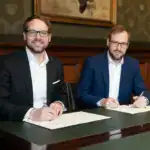
Kathrin and Alexander Wickenhäuser-Egger, who currently operate the “Münchner Stubn” restaurant and a similarly named tent at Oktoberfest, are seeking to expand their presence at the world-famous folk festival. According to BR information, they have applied for a spot at the Volkssänger-Zelt on the Oidn Wiesn and, more notably, for two highly sought-after locations within the main Oktoberfest grounds: the Paulaner Tent and the Pschorr-Bräurosl. Their application specifies a desire to operate their own festival tent at these locations, a move described by observers as unusual.
Traditional Allocation Practices Under Threat?
The applications are significant because both the Paulaner Tent and the Pschorr-Bräurosl are traditionally reserved for brewery-operated tents. Of the 17 large festival halls, Munich breweries have the authority to select the landlords for seven of them, including these two, which are part of the Paulaner Brewery Group. The City of Munich typically approves the breweries’ choice of landlords without further tender.
According to Maximilian Schmid, the Wickenhäuser-Eggers’ lawyer from Schönfelder und Ziegler, the application was sent directly to the City of Munich due to the absence of a public tender process for these brewery-controlled spots. Schmid clarified that while media speculation suggested a potential lawsuit before the European Court of Justice, the family has neither considered nor discussed such a legal challenge.
The Role of Breweries and the European Public Procurement Journal
The current system allows breweries to select their own landlords, meaning these specific tent locations are not typically advertised in the European Public Procurement Journal or elsewhere. The City of Munich appears to have interpreted the reference to the EU journal as a broader inquiry into whether applications for the world’s largest folk festival should be subject to Europe-wide tenders.
When contacted by BR, the Paulaner Group deferred to the City of Munich, stating that the application and allocation procedures for Oktoberfest tents are managed by the city. As a traditional Munich brewery, they adhere to the city’s long-established guidelines. The Association of Munich Breweries also emphasized that the allocation process is a municipal matter, while simultaneously asserting that the festival’s global renown is intrinsically linked to the Munich breweries.
City of Munich Emphasizes Bavarian Tradition
The City of Munich’s Department of Labor and Economic Affairs (RAW), responsible for Oktoberfest, declined to comment on ongoing tenders. However, the department noted that there have been numerous legal disputes regarding Oktoberfest admissions over the past decades, and the evaluation process has been judicially reviewed and upheld multiple times, confirming the city’s legal position.
Furthermore, RAW stressed that Oktoberfest is a Munich and thus Bavarian festival, deeply rooted in regional traditions, local specialties, and Munich’s way of life and products. The department argued that a Europe-wide tender would contradict these fundamental aspects of the festival.
Historical Context and Future Implications
This challenge is not the first time the Oktoberfest allocation process has faced scrutiny. Past legal battles have consistently affirmed the city’s right to manage the festival in accordance with its established traditions. The current situation highlights a tension between traditional local practices and broader European Union procurement principles.
The outcome of the Wickenhäuser-Eggers’ application could set a precedent for future Oktoberfest tent allocations, potentially opening up more opportunities for independent restaurateurs to secure prime locations. However, the city’s strong stance on preserving the festival’s Bavarian identity suggests that any changes to the current system would likely be met with significant resistance.
The debate surrounding the Oktoberfest tent allocation underscores the complex interplay of tradition, economic interests, and legal frameworks in managing one of the world’s most iconic cultural events. As the festival approaches, all eyes will be on Munich to see how this latest challenge unfolds.
Source: https://www.br.de/nachrichten/bayern/gerangel-um-wiesnzelte-geraet-die-vergabepraxis-ins-wanken,V9c9Tcw