Siemensbahn Reaktivierung: Berlin reconnected after four decades
Berlin, January 28, 2026 – After more than 40 years of inactivity, the Siemensbahn is set to rejoin Berlin’s S-Bahn network. This project, combining industrial heritage with contemporary transport policy, aims to significantly enhance connectivity in the city’s northwest. One of the most demanding construction phases has now begun.
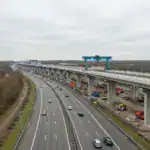
The reactivation of the Siemensbahn is also a bridge-building project. New railway bridges are being constructed along the route, while existing structures are being renovated or reinforced. These measures are crucial to ensure the historic route meets current technical and safety standards.
From Overgrown Tracks to Future Route: The Siemensbahn’s Comeback
For decades, little moved between the overgrown tracks and rusty bridges. Now, train services are set to resume on the old route: the Siemensbahn, originally built for the workers of Siemensstadt, is being reactivated. For Berlin, this is more than just a technical infrastructure project; it is another attempt to reconcile growth and mobility.
The re-commissioning is part of the “i2030 – More Rail for Berlin and Brandenburg” program. A modern S-Bahn connection is planned between Jungfernheide and Gartenfeld. This will bring Siemensstadt Square, one of the largest urban development projects in the coming years, closer to the Ringbahn, providing short connections to the main station and BER airport.
Siemensstadt: From Industrial Railway to Future Route
When the Siemensbahn opened in 1929, tens of thousands of people already worked in Siemensstadt. The line was intended to facilitate daily commuter traffic and connect the expanding industrial site. War damage, the division of Germany, and the S-Bahn boycott in West Berlin ultimately led to its closure in 1980. Since then, the elevated railway has remained unused, a technical monument in the heart of the city.
Now, it is to be revitalized over a length of approximately 4.5 kilometers – from the Westhafen area via Jungfernheide, through Charlottenburg and Siemensstadt, to Gartenfeld. Deutsche Bahn is relying on the “Partnership Model Rail,” where planning and construction are jointly organized from the outset. The goal is to better manage costs and deadlines and to resolve conflicts early on.
Construction Amidst Heritage Protection and Ongoing Operations
A consortium of several construction companies is responsible for the central construction package, known as “KIB Neubau.” This includes the Austrian construction group PORR, which has already been involved in numerous rail and infrastructure projects in Germany. The project also includes new railway bridges, stations, pedestrian tunnels, noise barriers, and support structures, as well as earthworks, civil engineering, and logistics areas for the entire project.
The general conditions are considered challenging. Construction is taking place in a densely populated urban area, partly directly next to still-used tracks. Many tasks must be carried out during short night-time closures. In addition, there are listed existing structures and interventions in the Spree area.
Spandau: Old Route Gets New Purpose
The CEO of the participating construction group stated that they intend to contribute their experience in railway construction and see the partnership model as an opportunity to implement complex projects faster and more purposefully. For Berlin, this primarily means one thing: an old route gets a new purpose, and a neglected part of the city gets significantly better connectivity.
Sources: PORR Deutschland, i2030