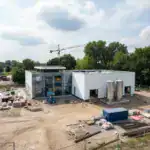
The boy tugs at his mother’s sleeve, his eyes wide with anticipation. He points to the glass barrier, hoping that if he’s lifted high enough, he’ll finally see them. “Where are they?” he asks, his voice a mixture of hope and confusion. But even from his mother’s arms, the view remains the same: still water, no movement, nowhere. The seals, once a vibrant attraction at Munich’s Hellabrunn Zoo, are gone.
The Silent Departure: A Zoo in Transition
This scene, unfolding on a recent afternoon, is becoming increasingly common at Hellabrunn. The enclosure that once housed playful seals now stands eerily quiet, a stark reminder of the changes sweeping through the historic zoo. It’s a poignant symbol of a larger narrative – one of difficult decisions, the emotional burden on staff, and the evolving role of zoological institutions in an era of climate change and shifting conservation priorities.
The seals are not the only beloved residents to have vanished. The last polar fox, a creature of stark beauty and resilience, passed away in March, leaving its habitat vacant. Other popular animals have quietly disappeared over time, their absence leaving behind not just empty spaces, but also a lingering sense of loss among regular visitors.
More Than Just Empty Cages: The Emotional Weight
For the staff at Hellabrunn, these departures are more than just logistical changes; they represent profound emotional experiences. “It’s never easy to say goodbye to an animal, especially when you’ve cared for them for so long,” says a long-time zookeeper, who wishes to remain anonymous. “Each empty enclosure is a reminder of a life we cherished, a story we shared.”
The decisions behind these vacancies are complex, often driven by a confluence of factors including animal welfare, species conservation programs, and the practical challenges of maintaining aging facilities. Modern zoos are increasingly focusing on breeding programs for endangered species and creating more natural, expansive habitats, which sometimes means re-evaluating the collection of animals they can responsibly house.
The Future of Hellabrunn: Adapting to New Realities
Hellabrunn, a geo-zoo where animals are grouped by their geographical origin, has a rich history dating back to 1911. However, like many zoos worldwide, it faces the imperative to adapt. The empty enclosures, while initially saddening, also open up possibilities for redevelopment and new initiatives that align with contemporary conservation goals.
The challenge lies in balancing the public’s desire to see a wide variety of animals with the ethical responsibilities of animal care and global conservation efforts. Zoo management must navigate these waters carefully, communicating transparently with the public about the reasons behind these changes and the vision for Hellabrunn’s future.
Beyond the Enclosures: A Broader Conservation Message
The empty enclosures at Hellabrunn serve as a powerful, albeit subtle, message to visitors. They prompt reflection on the broader issues of biodiversity loss, habitat destruction, and the impact of climate change. In a way, these vacant spaces become educational tools, encouraging a deeper understanding of the challenges facing wildlife globally.
As the zoo moves forward, the hope is that these spaces will eventually be filled again, perhaps with animals that are part of vital breeding programs, or with innovative exhibits that tell new stories of conservation and adaptation. For now, they stand as quiet monuments to lives lived and the ongoing, often difficult, journey of a modern zoo.
The boy eventually moves on, his mother explaining that sometimes animals go to new homes or grow very old. But the image of the empty seal basin lingers, a reminder that even in places designed for wonder, there are stories of absence, resilience, and the ever-present call for understanding and action.
Source: https://www.sueddeutsche.de/muenchen/muenchen-tierpark-hellabrunn-robben-paviane-gehege-leer-li.3520059